SOUNDPROOFED GLASS
What is SOUNDPROOFED GLASS made of?
Your home is your safe place to rest and relax after a long day at work. Recently, this has become impossible due to the increase in noise levels in our cities
Before, only people who lived near main roads complained about noise pollution, but now quieter streets are also flooded. Noise pollution remains a major problem in urbanization. Long-term exposure to noise pollution can damage your hearing and cause stress, exhaustion, and trouble sleeping, among other things Choosing acoustic or acoustic glass for your windows is a practical solution to the problem of increased exterior noise levels, whether it's car horns, a construction site, a loud party at your house. neighbors or the noisy neighborhood in which you live.
What is SOUNDPROOFED GLASS?
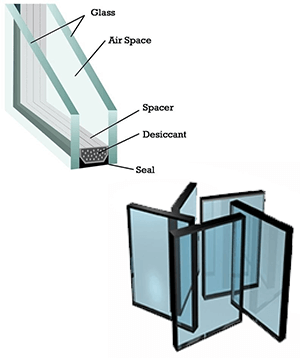
Acoustic glass, commonly referred to as acoustic glass, is basically laminated glass made by laminating two layers of glass with a PVB interlayer The glass appears to be made from a single pane due to the interlayer of PVB that holds the glass sheets together Additionally, the PVB interlayer functions as an acoustic layer with excellent sound absorption properties.
Thanks to a special PVB film in the core of the glass, the vibration of sound frequencies from one glass to another is avoided. Additionally, you can install sound-absorbing glass of different thicknesses, depending on how much soundproofing your home needs.
The benefits of choosing acoustic glass
noise reduction
The main benefit of installing soundproof glazing is that it can provide sound insulation against outside noise from vehicles, people, construction sites, etc up to 90% Thus, you can create a protective bubble in your home with soundproof glass
Improve security
Acoustic glass offers excellent security and is an efficient laminated glass Compared with annealed glass, soundproof laminated glass is stronger and more durable The inner PVB interlayer of the acoustic glass prevents it from breaking easily This type of glass resembles a spider's web because if broken, the glass shards adhere to the PVB interlayer instead of breaking. You are less likely to be injured by sharp shards of glass because the glass will not break or fall.
Superior Comfort
By choosing a Low-E coating for your soundproof glass, you may achieve your goal of maintaining the ideal temperature in your home. SOUNDPROOFED GLASS can provide the best interior insulation for your house by choosing a Low-E coating. These glass windows keep the interiors warm during the winter by preventing heat from escaping through them. As a result, you won't need as many artificial cooling or heating systems, which will immediately save your energy costs. The soundproof glass with Low-E coating is therefore an energy-efficient choice for your house.
UV-Protection
By reducing ear-splitting decibel levels, soundproof glass not only enhances your health but also shields you and your loved ones from dangerous ultraviolet (UV) and infrared (IR) radiation. By installing laminated soundproof glass in windows and doors, you may shield yourself from sun glare and dangerous UV rays. Additionally, installing laminated soundproof glass helps shield your home's upholstered furniture, carpets, rugs, and other furnishings from UV and IR radiation damage.
There is only one location you can buy window and door frames that are specially built to block out outside noise when you're wanting to have soundproof glass placed in your home, and that place is Stairway Studio. At Stairway Studio, we provide a variety of fenestration products in wood, aluminum, and uPVC substrates. We also adhere to and comply with global production standards. From consultation to hassle-free installation handled by skilled specialists, we offer a full range of services. They also pride themselves on providing great after-sales support to ensure total client satisfaction.
How Does Soundproof Glass Work?
Many houses include noise-absorbing walls that try to reflect the sounds outside. A lot of these barriers consist of doors, windows, drywall, and walls. Direct sound waves from the outside are blocked by them.
The glass itself does a poor job of isolating noise. As soon as it picks up sound waves, it begins to vibrate and either reverberates or allows the waves to pass through. A few processes take place to soundproof glass.
First, producers of soundproof glass will add mass, increasing the thickness of the glass. We all know that thicker fabrics block out more sound. Noise is diminished by thick glass because energy can dissipate on its surface.
Any glass sheet, regardless of thickness, will have what we refer to as coincidence frequency. Due to its size, shape, and coincidence frequency, glass can magnify sound instead than muffle it. When this occurs, the noise is increased rather than reduced.
The typical issue with thickness is a decrease in the frequency of vibration of the glass panel. When the audio is thick enough, the frequency can fall low enough to be audible to human ears.
Many soundproof windows use a different thickness for many layers to reduce coincidence frequency. The typical combination allows for a better decoupling interlayer by having a thickness differential of about 30%.
The Additional Advantages Of Soundproof Glass
In the end, your goal with your glass may not just be soundproofing, depending on your intent. Having said that, you would prefer soundproof glass that has additional functions. You can benefit more from it than just getting a piece of mind. Think about the additional advantages the soundproof glass might provide.
Some glass makers laminate the glass with additional layers. Low-E coating and other specialized laminates assist in maintaining consistent indoor temperatures. They assist
control indoor temperature by preventing influxes of heat and cold.
Additionally, some eyewear has an anti-radiation coating that aids with UVA and UVB sun protection. By doing this, you improve both your health and the appearance of your home's furniture.
Conclusion
Fantastic material and effective approach to reduce most outside noise is soundproof glass. Your glass has greater noise reduction thanks to two pieces of unique glass and additional treatments. This glass is an essential component that can assist with soundproofing your house.
Even then, keep in mind that soundproofing is only as effective as the weakest component. No matter how costly your soundproof glass is, it won't help. The entire system is meaningless if your other resources are inadequate. To reduce noise, have your materials support one another.
Using materials that can sustain your soundproofing glass is the best approach to soundproofing your home. For instance, you can increase the glass's ability to muffle the sound by using thick drapes. Additionally, there are techniques for strengthening your walls with drywall and insulation that help lessen outside noise.
If you don't have a plan, soundproofing might be very pricey. First, ensure that you have a goal in mind. Not everyone needs to block out every noise they come across.
Do you have any plans to use soundproof glass? To determine whether it's appropriate for you, contact Stairway Studio today!
Comments
Post a Comment